 Afterhue
Why is the earliest sunset before the winter solstice?
The earliest sunset of the year comes in early December in the Northern Hemisphere, about two weeks before the winter solstice, and the latest sunrise comes in early January. The reason is that solar noon drifts later on the clock through December, which pushes both sunrise and sunset later even as the days still shrink.
Coming soon to iPhone
Is the shortest day also the day of the earliest sunset?
No. The winter solstice is the shortest day, but the earliest sunset falls earlier, and the latest sunrise falls later. Wikipedia says that in the Northern Hemisphere the earliest sunsets occur some time before December 21 and the latest sunrises some time after, depending on latitude, and that the southern hemisphere has the same pattern reversed around June 21 (Wikipedia: Sunset).
For a few weeks around each solstice, both sunrise and sunset get slightly later each day.
What are the approximate dates?
Around 40 degrees north, which covers cities like Philadelphia, Madrid and Beijing, the pattern runs roughly like this. The dates move by a day or two depending on latitude, and the exact times vary, so treat them as a guide.
| Event (Northern Hemisphere, about 40 N) | Approximate date |
|---|---|
| Earliest sunset | Around December 7 |
| Winter solstice (shortest day) | December 21 or 22 |
| Latest sunrise | Around January 4 |
| Southern Hemisphere earliest sunset | Early June |
| Southern Hemisphere latest sunrise | Early July |
Why do the sunset and the solstice not line up?
Because day length is not the only thing that changes. The clock sets noon at a fixed time, but the sun does not cross the sky at exactly that rhythm. The difference between sundial time and clock time is called the equation of time, and it swings by several minutes over the year. In December, solar noon moves later on the clock by roughly half a minute each day.
That drift adds to both sunrise and sunset. Near the solstice the days themselves are changing very slowly, by only seconds, so the drift wins.
What causes the equation of time?
Two things. The Earth's orbit is an ellipse, so it moves faster when closer to the sun in early January. And the tilt of the Earth's axis means the sun's yearly path is angled against the equator. Wikipedia describes the equation of time as the result of these two effects, the eccentricity of the orbit and the obliquity of the axis, acting together (Wikipedia: Equation of time). Combined, they make solar noon slide by up to about a quarter of an hour either way over the year.
How can the day be shorter while sunset gets later?
Picture two separate effects added together. The first is day length, which shrinks until December 21. The second is the drift in solar noon, which pushes the whole day later on the clock. In early December, the drift is bigger than the shrinking, so sunset starts moving later. Sunrise is hit by the same drift plus the shrinking day, so it keeps moving later until early January.
- Late November: days shorten quickly and sunset moves earlier.
- Early December: the day still shortens, but the clock drift cancels it, and sunset stops moving earlier.
- December 21: shortest day, with sunset already getting later and sunrise still getting later.
- Early January: sunrise stops moving later and begins to move earlier.
Does latitude change the pattern?
Yes. The gap between the earliest sunset and the solstice is larger at lower latitudes and smaller at higher ones. In the tropics, the shifts in sunrise and sunset are small throughout the year. Wikipedia notes that even on the equator, sunrise and sunset shift several minutes back and forth through the year, along with solar noon.
Why does this matter for evening plans?
It explains why dark afternoons start to feel better in December even though the days are still getting shorter. The sunset has turned the corner. For anyone planning to catch the evening light, it also means a fixed alarm drifts away from the sun. A phone reminder set for tonight can be 20 to 40 minutes off after three weeks.
What are some common misunderstandings?
Three come up often. The first is that the earliest sunset and the latest sunrise happen on the same day. They do not, and they are almost a month apart. The second is that the days start getting longer on the solstice and so it feels brighter right away. The afternoons do brighten first, but the mornings keep getting darker until the new year. The third is that the pattern is a local quirk. It is a global feature of the calendar, mirrored in each hemisphere.
How big is the difference in minutes?
Small, but you can feel it. At roughly 40 degrees north, between the first week of December and the first week of January the sunrise slides about 20 minutes later, while the sunset gains about 10 to 15 minutes. The evening gain starts slowly, only a few minutes by the solstice, and speeds up in January. In higher latitudes the day length itself changes faster, and the gap between the earliest sunset and the solstice is smaller.
Check any tool you like for a few dates to see this on your own screen, instead of trusting a rule of thumb.
How does Afterhue keep up?
The golden-hour reminder is recalculated from the sun math on the phone, so it follows the sunset as the seasons shift. You pick 30 minutes before, 15 minutes before or at golden hour, and the days. It repeats without any setting up again. Sun times are computed on the iPhone and keep working offline.
Where can I check my own dates?
The NOAA solar calculator lets you enter a location and see sunrise and sunset for any date, which shows the turn clearly if you compare a few days in late November and December. Our guide to what golden hour is explains how the window around sunset changes with latitude.
Frequently asked questions
Why is the earliest sunset before the winter solstice?
Solar noon drifts later on the clock through December, which pushes sunset later even while the days are still getting shorter.
When is the earliest sunset of the year?
Around December 7 at about 40 degrees north, with the date shifting a few days with latitude.
When is the latest sunrise?
Around the first week of January in the Northern Hemisphere.
Does the Southern Hemisphere have the same pattern?
Yes, reversed. The earliest sunset comes before June 21, and the latest sunrise comes after it.
Will my golden-hour reminder shift with the sunset?
Yes. Afterhue recalculates it from the sun times on your iPhone, so it follows the sunset without being reset.
Keep exploring
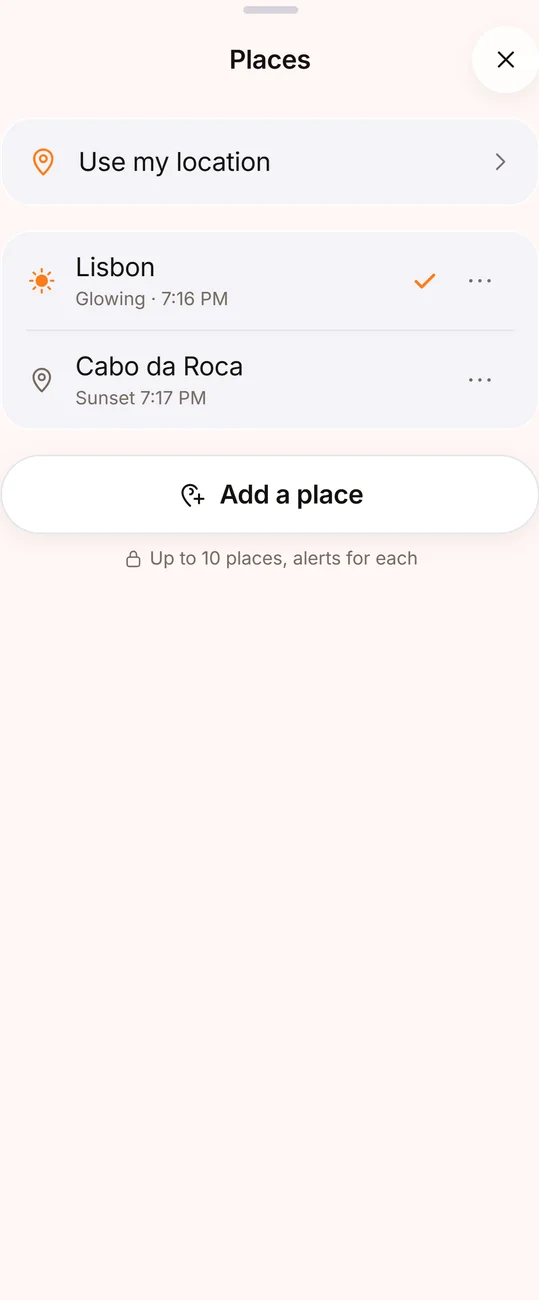 3-Day Sunset Outlook and Saved PlacesThree days of sunsets and sunrises as ranges, and up to 10 saved places with alerts.